

In Haiti, soil erosion is a serious and growing problem, especially in areas where trees and vegetation have been lost. During heavy rains, water rushes downhill with great force, washing away fertile soil and carving deep gullies that damage farmland, roads, and entire communities. At GVADK, we work to slow this destruction by using practical, proven methods to protect the land and restore the environment.
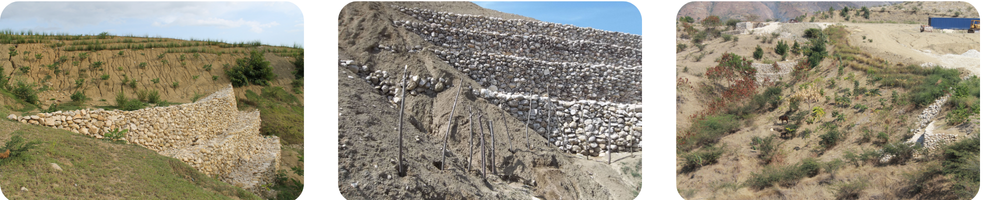
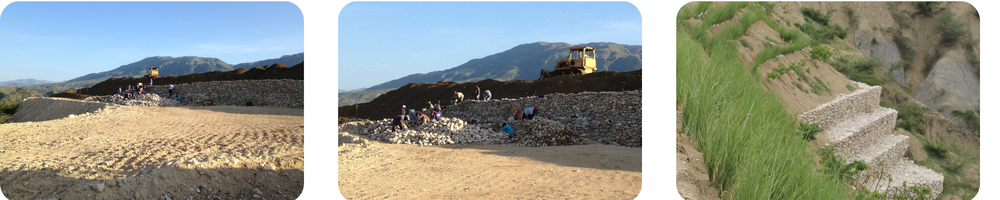
One effective approach is the construction of dry stone walls. This traditional technique has long been taught by agronomists as a way to conserve soil without the use of cement. Stones are carefully stacked at a slight angle so they remain stable while allowing water to slow down and pass through. As rainwater carries sand and debris, these materials settle between the stones, strengthening the wall over time. In areas where stones are readily available, this method is both durable and environmentally friendly. In the GVADK area, however, stones are not always accessible and often must be purchased, which increases costs.
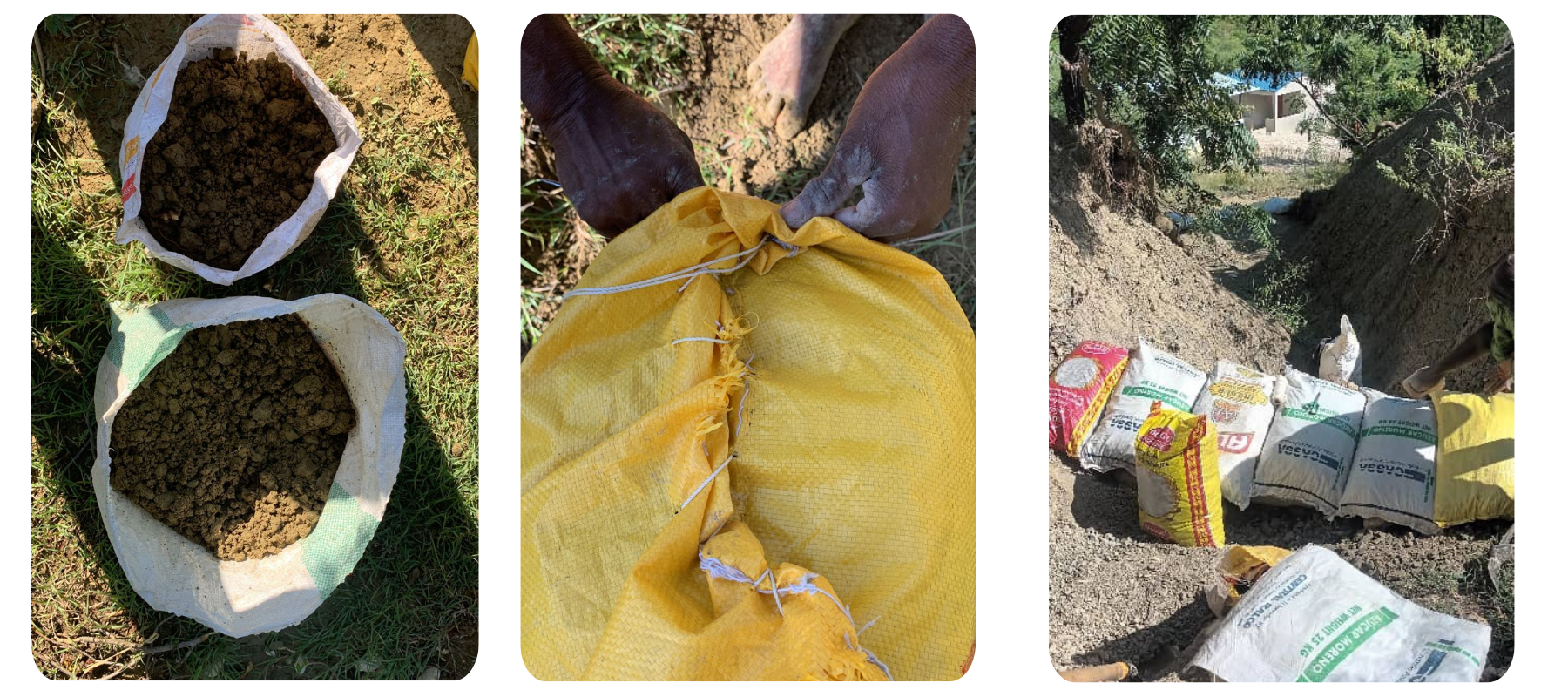
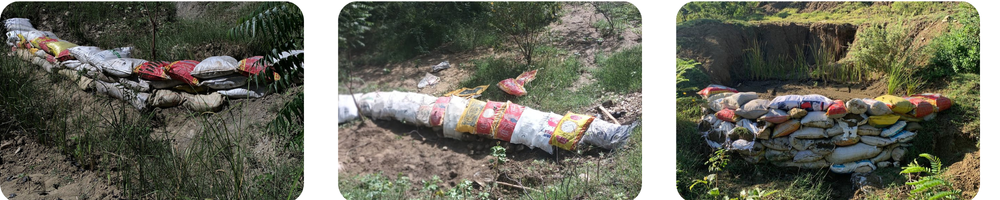
Because of this, much of our current work focuses on walls built with sacks filled with soil, reinforced with vetiver grass. These sandbag walls are extremely effective and allow us to respond quickly in areas where erosion is advancing rapidly. The process is labor-intensive: soil must be dug, sacks filled and sewn, then carried and carefully placed to form a barrier. While physically demanding, this method uses local materials and provides immediate protection during the rainy season.
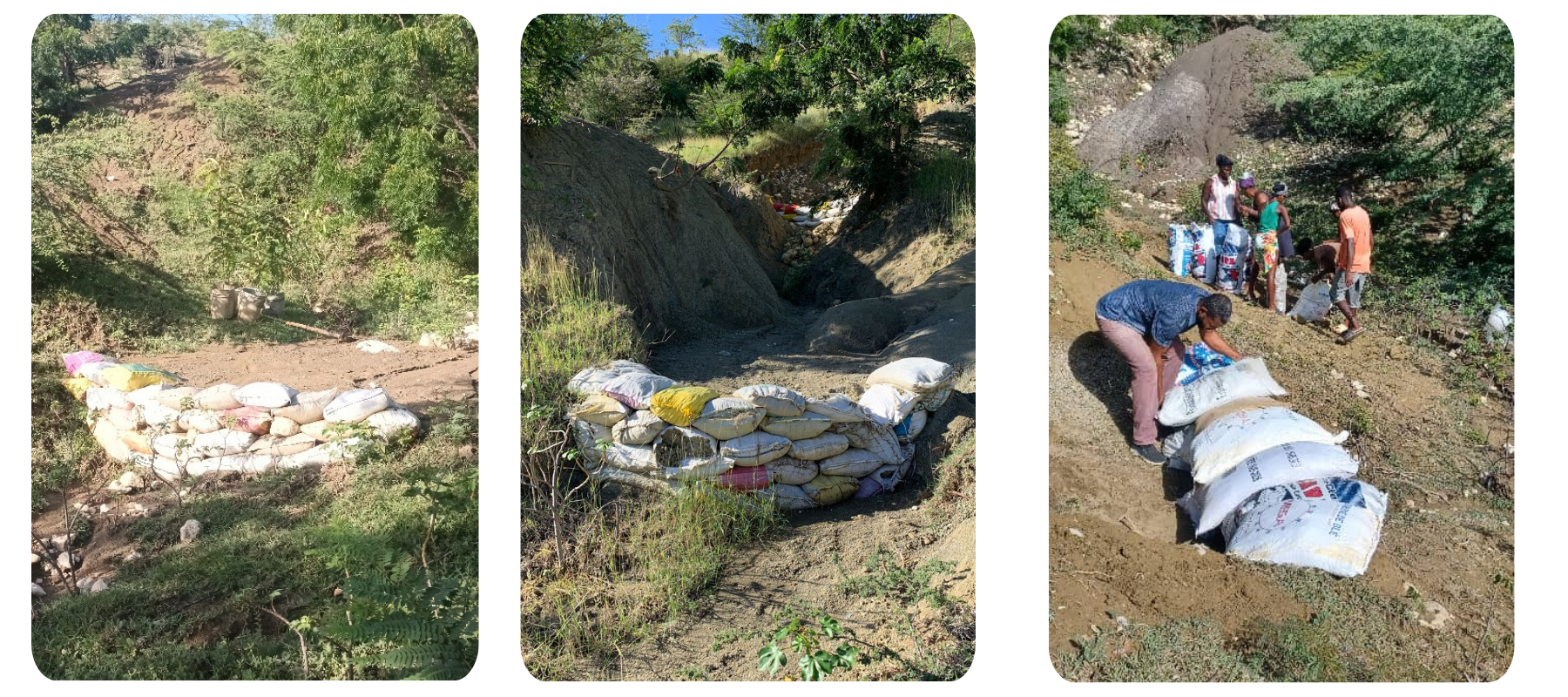
In 2025, we installed approximately 500 sandbags, with encouraging results. When rains fall, the sacks slow the flow of water and hold the soil in place, preventing further loss. Even when the bags begin to tear over time, their purpose has already been fulfilled—protecting the land during the most vulnerable period.
To ensure long-term sustainability, we combine sandbag walls with the planting of vetiver grass. Vetiver has deep, strong roots that bind the soil together and continue to protect the land long after the sacks naturally degrade, usually after two to three years. This combination allows us to move quickly while also investing in lasting environmental restoration.
Looking ahead to 2026, we are planning a larger erosion-control project using up to 1000 sandbags, along with expanded vetiver planting. These projects are not extremely expensive, but they do require resources, labor, and community support. Every wall built helps preserve farmland, protect homes, and restore hope for the future.
Through stone walls, sandbag barriers, and vetiver planting, GVADK remains committed to caring for the land and the people who depend on it. We invite you to support this work through prayer, encouragement, or financial partnership as we continue fighting erosion and building a healthier future for the Cazale area.