

How School Works in Haiti: A Stage-by-Stage Breakdown
If you’ve ever tried to figure out how the Haitian school system compares to the American one, it can feel confusing — different names, different grading scales, different exams. Here’s a walkthrough of the classical (traditional) Haitian school system, stage by stage.
Stage 1: Preschool (Ages 2–5)
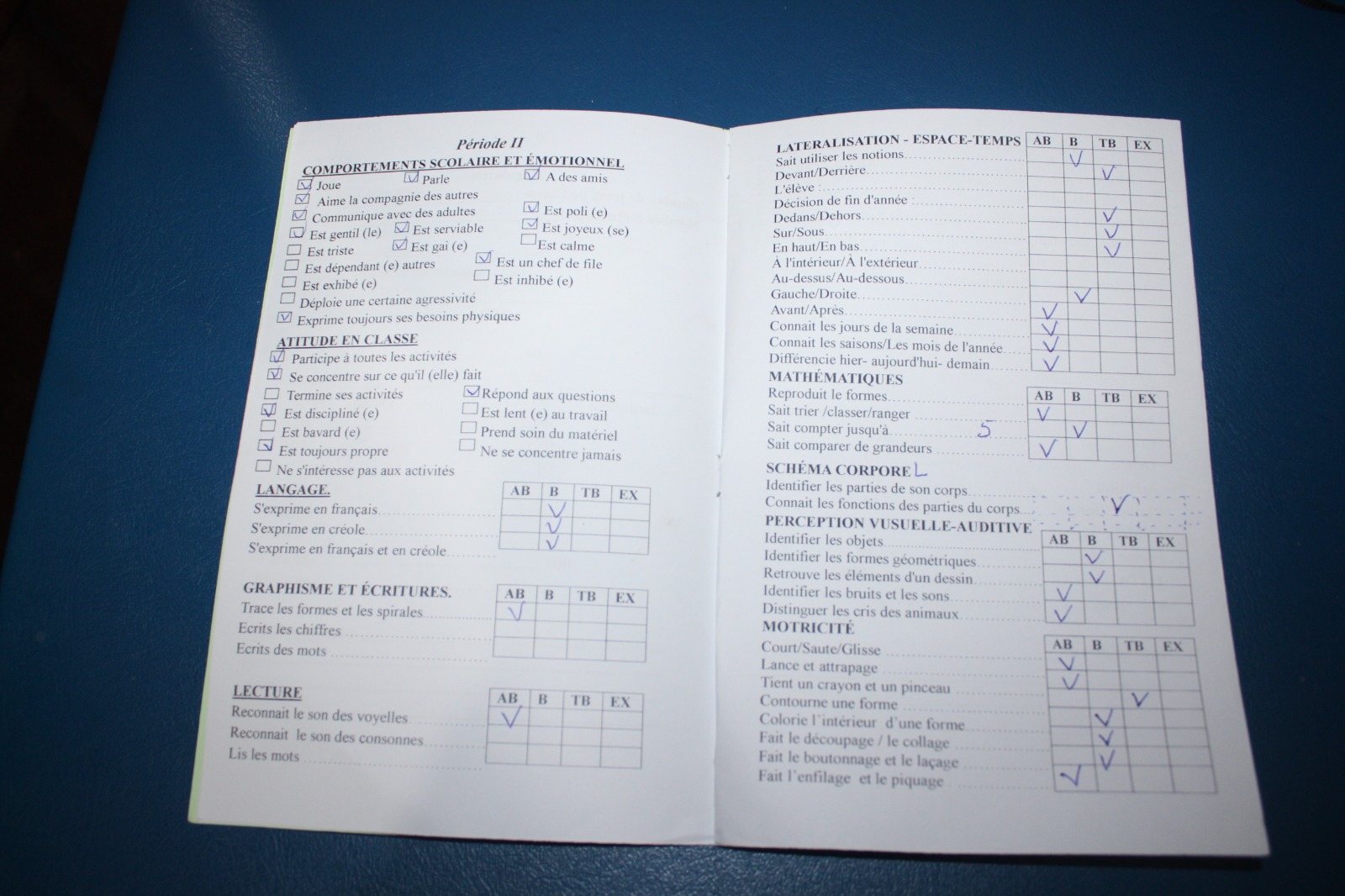
Think of this as Haiti’s version of pre-K and kindergarten combined, except it runs for three years instead of one or two. Kids learn the basics: songs, counting, colors, the alphabet, and how to get along with other kids through games and group activities — pretty similar to what you’d see in any American preschool classroom.
There’s no letter-grade report card at this stage. Instead, teachers write comments like “Good,” “Very Good,” or “Fairly Good” based on how the child is participating and progressing. Some schools throw a little graduation ceremony when kids finish preschool — like a mini “moving up” ceremony you might see at a U.S. daycare — but it’s optional, mostly because not every family can afford the cost of putting one on.
Stage 2: Fundamental Education, Part One (6 Years) — Like Elementary School
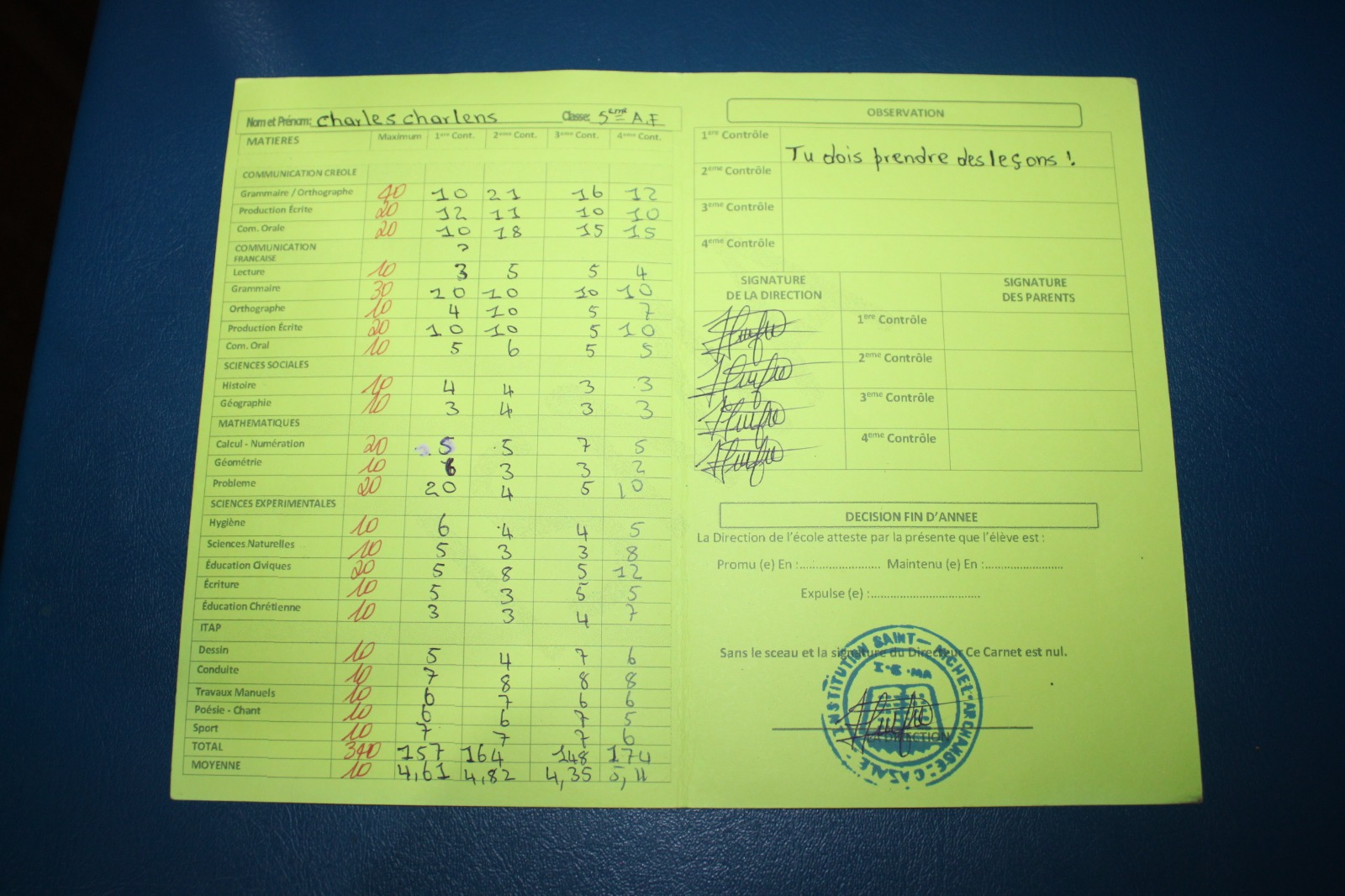
This is roughly the equivalent of American elementary school. Things get more serious: real classes, real exams, real grades. Schools score tests on different scales — out of 10, 20, 30, or 40 points — then average everything together to get an overall grade, similar to how a GPA works here.
Each school sets its own passing bar. Some require the equivalent of a 50% to pass, others require 60% or 70%. So a “passing grade” isn’t standardized nationwide — it depends on the school, kind of like how grading curves can vary from teacher to teacher in the U.S.
After these six years, there used to be a major roadblock: a national exam students had to pass before moving on. This test was notoriously hard, and a lot of kids got stuck — some spent years retaking it without success, and eventually dropped out altogether. It’s a bit like if every American kid had to pass a brutal standardized test just to go from 6th to 7th grade, and failing meant repeating it indefinitely. Thankfully, the Haitian government did away with this exam in recent years specifically because it was pushing too many kids out of school.
Stage 3: Fundamental Education, Part Two (Grades 7–9) — Like Middle School
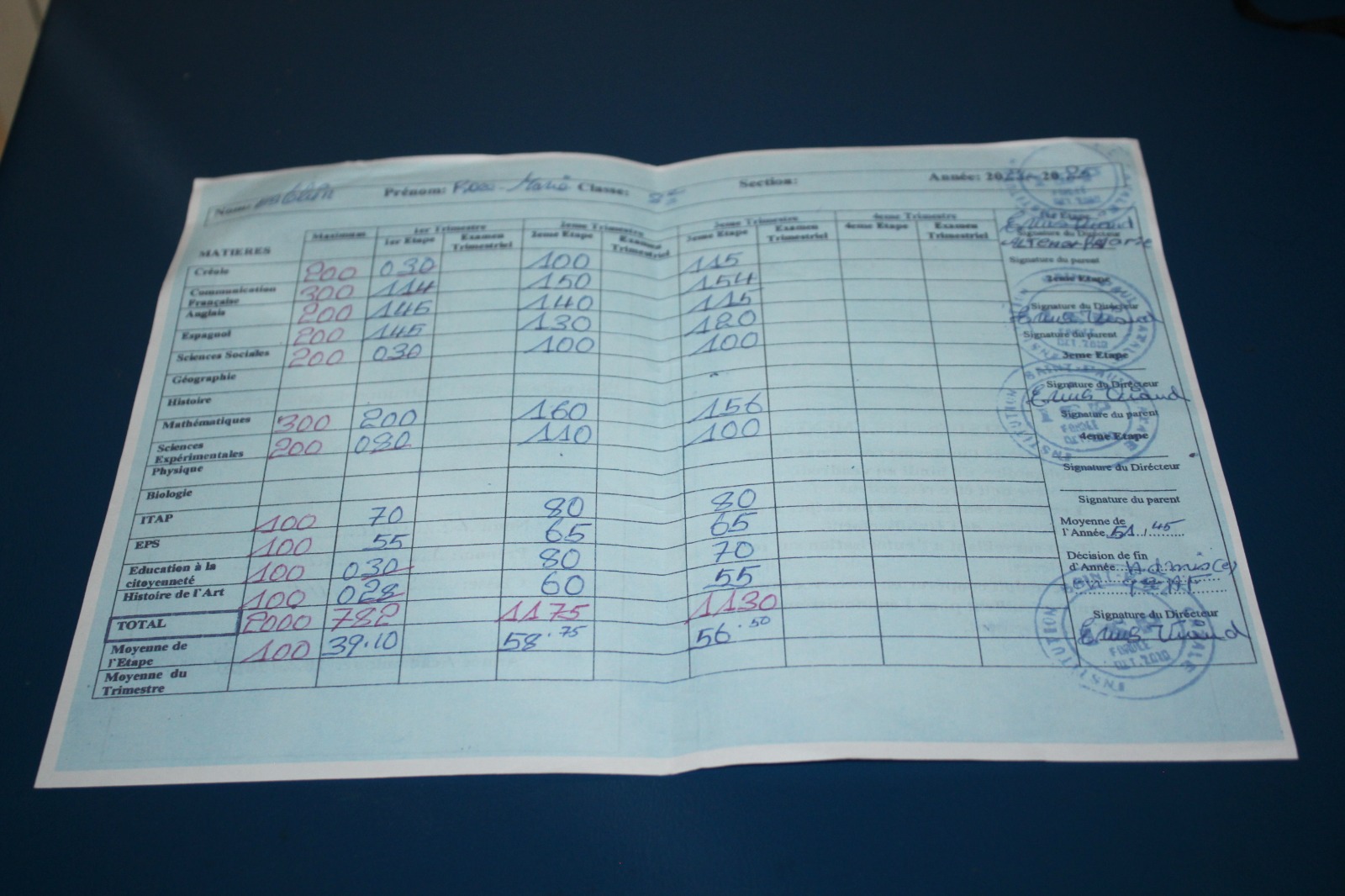
This stage looks a lot more like American middle school. Instead of one teacher for everything, students now have a different teacher for each subject, with a separate notebook for every class. Grading scales get bigger too — schools might score work out of 100, 200, or even 300 points depending on the subject.
To move up a grade, students typically need to average around 50 out of 100, though some schools set the bar higher, at 60 or 70. At the end of 9th grade, there’s a big national exam — and unlike the school’s own tests throughout the year, this one really matters. Passing it is what determines whether a student gets to move on to high school at all.
Stage 4: Secondary School (NSI–NSIV) — Like High School
Once a student clears that 9th-grade exam, they move into secondary school, which is basically Haiti’s version of high school. It’s broken into four years, called New Secondary 1 through New Secondary 4 (NSI–NSIV). If you’re talking to someone older or looking at older records, you might hear the classic French names instead:
| Old Name | New Name | Roughly Equivalent To |
|---|---|---|
| 3ème | NSI | 9th/10th grade |
| Seconde | NSII | 10th/11th grade |
| Rhéto | NSIII | 11th grade |
| Philo | NSIV | 12th grade (senior year) |
High school is where the workload really ramps up — more subjects, harder material, and a lot more riding on personal effort. The students who put in consistent work tend to do well; the ones who don’t often struggle to keep up.
The Finish Line: NSIV and Graduation
In NSIV — the senior year — students take their final national exams. Passing these is what earns them their secondary school diploma, the equivalent of a U.S. high school diploma, and what opens the door to applying to college.
Bottom line: Haiti’s system covers the same basic ground as the American one — preschool, elementary, middle school, high school — but it leans much more heavily on big national exams as gatekeepers between stages, especially at the end of 9th grade and senior year. That’s a sharp contrast to the U.S., where moving between grade levels rarely hinges on a single make-or-break test.