

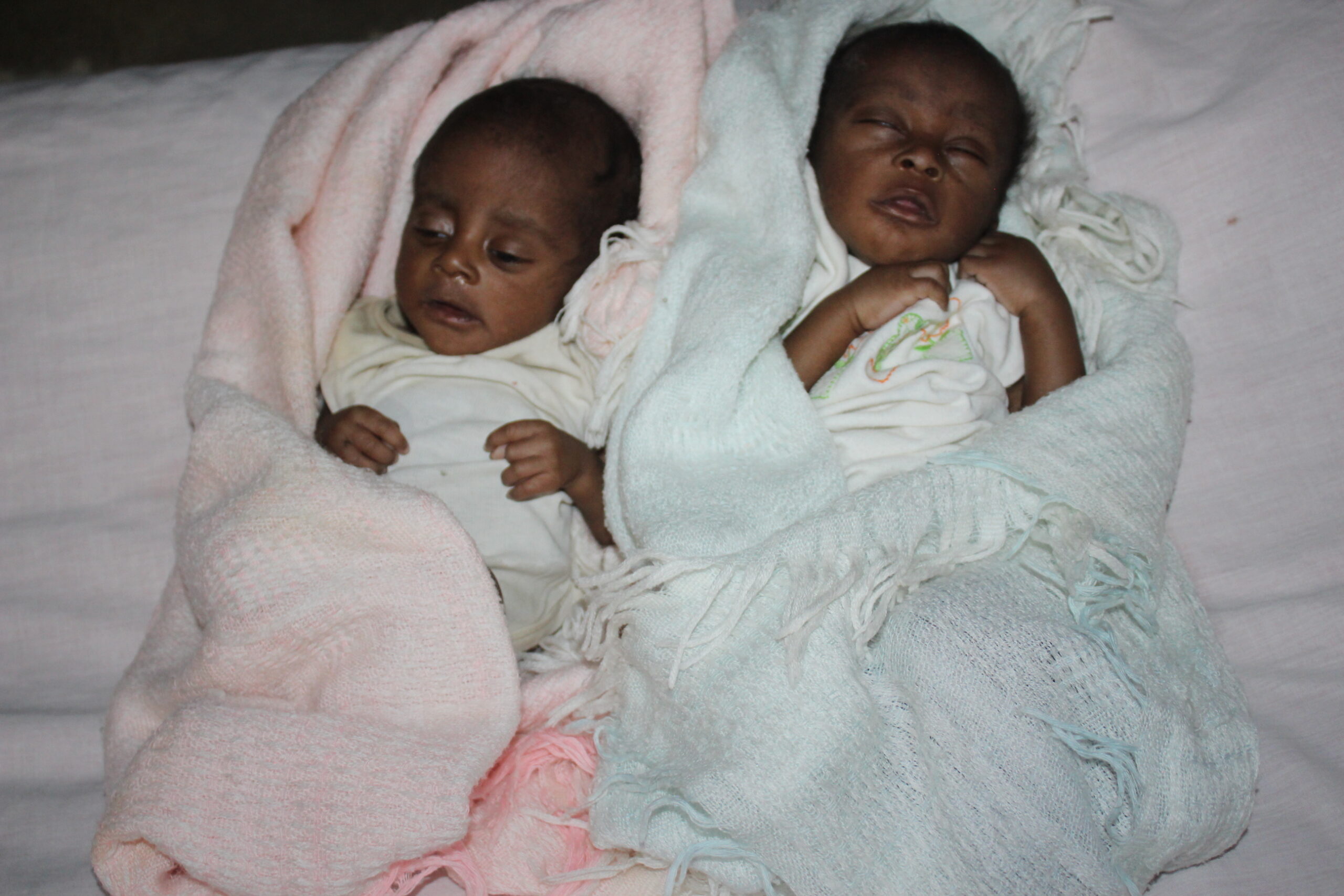
When twins Severe and Valestin were born on February 5, 2026, their parents were filled with joy. But that joy soon turned to fear. The family lives in a simple two-room home made of rocks with a tin roof. They support their five children by farming beans, corn, and millet, earning an average of just $76 a month. They have no running water, toilet, or outhouse and rely on a nearby river for water. Tragically, they have also lost five children.
When the twins’ mother developed a severe infection in her leg, she became too weak to care for her babies. Unable to breastfeed, the twins were fed crushed up crackers in water, but both soon developed diarrhea and kwashiorkor. After a difficult five-hour journey to our clinic, they arrived in critical condition. Severe was diagnosed with severe acute malnutrition at -3 SD, while Valestin’s condition was even more severe at -4 SD, both had the beginning signs of kwashiorkor.
The twins and their mother were admitted to our inpatient Nutrition Center. While their mother received treatment for her infection, the twins began life-saving care. Through specialized medical care, therapeutic nutrition, and close monitoring, they slowly began to recover.
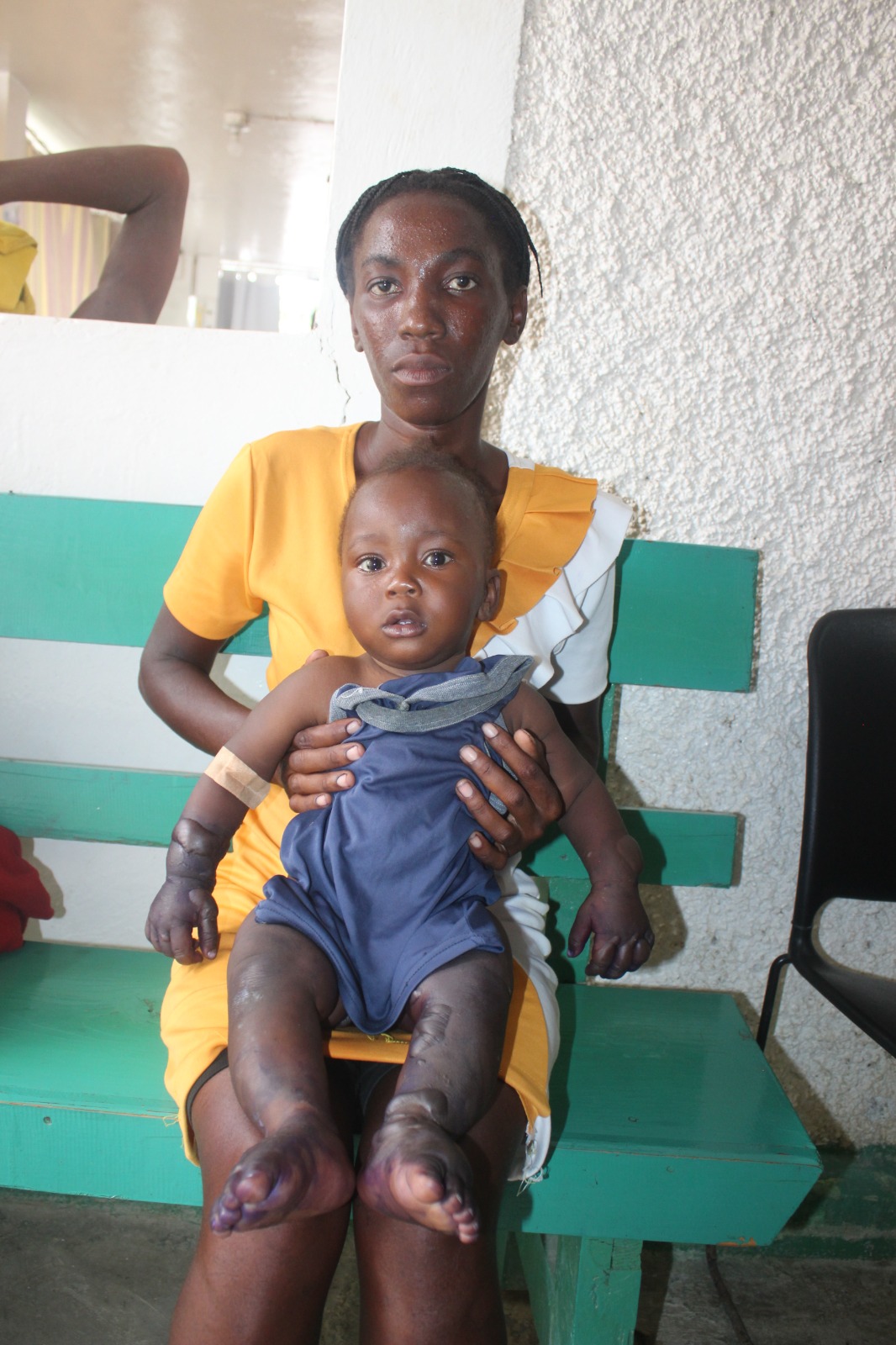
Lorguensley’s journey to our clinic began with an accident. The young boy suffered severe burns to both of his legs, leaving him in need of specialized medical care that his family could not find close to home. Determined to help their son, his parents made the exhausting eight-hour journey by motorcycle and on foot to reach Real Hope for Haiti.
Lorguensley is the only living child in his family after the heartbreaking loss of one sibling. His parents work as farmers, growing beans, corn, millet, and sweet potatoes to support their family, but they earn an average monthly income of only $57. They live in a modest two-room home built from rocks and clay with a tin roof.
When Lorguensley arrived at our clinic, he weighed 7.5 kg (about 16½ pounds). Because his burns required ongoing treatment, he and his mother stayed at our Rescue Center while our medical team provided daily wound care, carefully cleaning and dressing his injuries to prevent infection and promote healing.
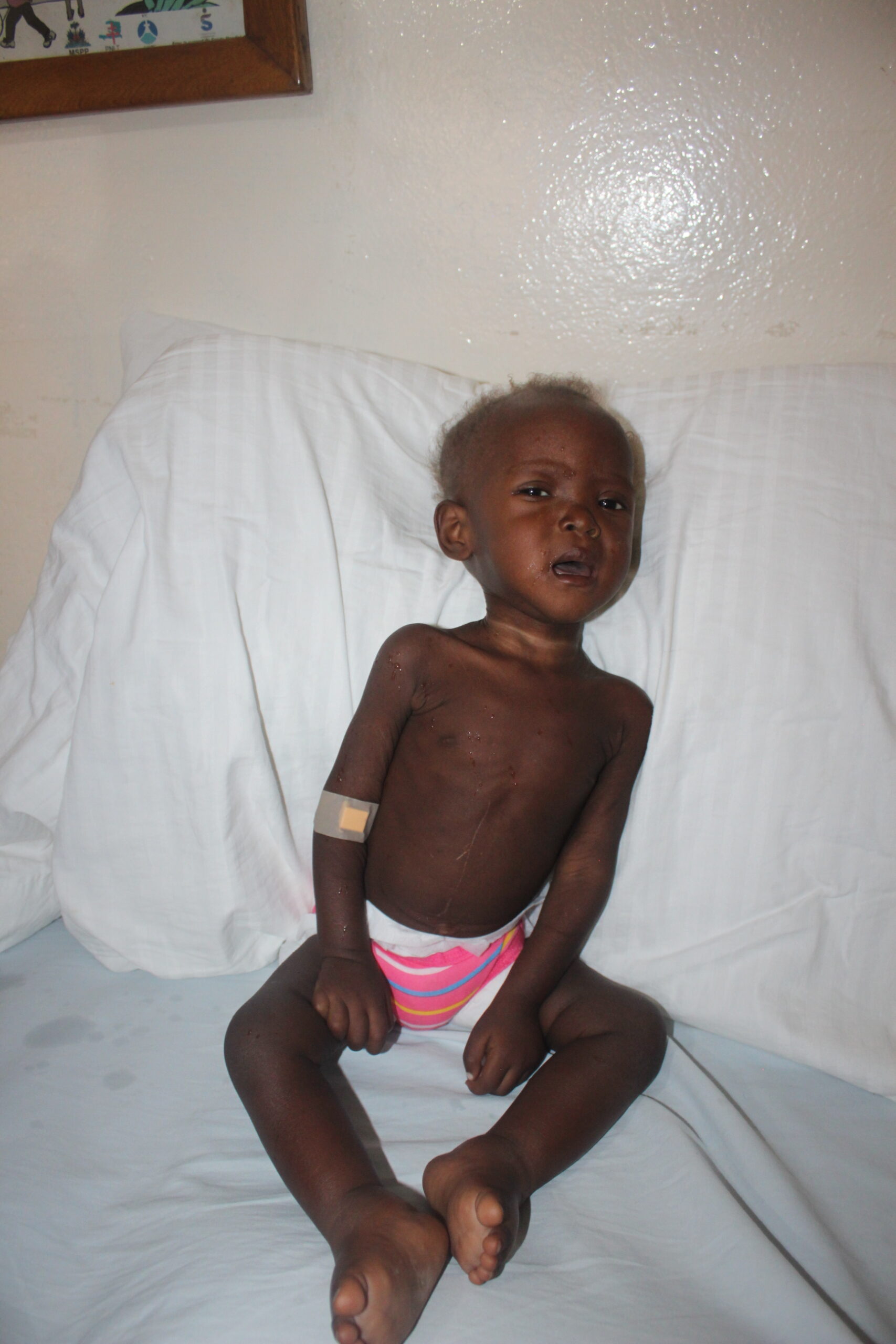
At just 11 months old, Angeline was fighting for her life. Weighing only 4.9 kg (about 10.8 pounds), she was diagnosed with severe acute malnutrition (-4 SD) and kwashiorkor with 1+ edema. She also suffered from a fever and a persistent cold, leaving her weak and without the strength to grow and thrive.
Angeline’s parents work hard to provide for their family. Her father farms watermelons and sweet potatoes, while her mother earns a small income by purchasing carrots, spices, and other goods in bulk to resell. Together, they earn an average of only $50 per month. The family lives in a simple two-room home made of brick and clay with a tin roof. They have no running water or flush toilet, although they do have an outhouse and collect water from a nearby public pipe.
When Angeline became ill, her family believed she had been affected by a curse. Fearing for her life, they brought her to our clinic, where our medical team quickly recognized the true cause of her illness—severe malnutrition complicated by infection. She was immediately admitted and started on F-75 therapeutic milk to carefully stabilize her condition. As her strength returned, she transitioned to Medika Mamba, providing the nutrients her small body desperately needed.
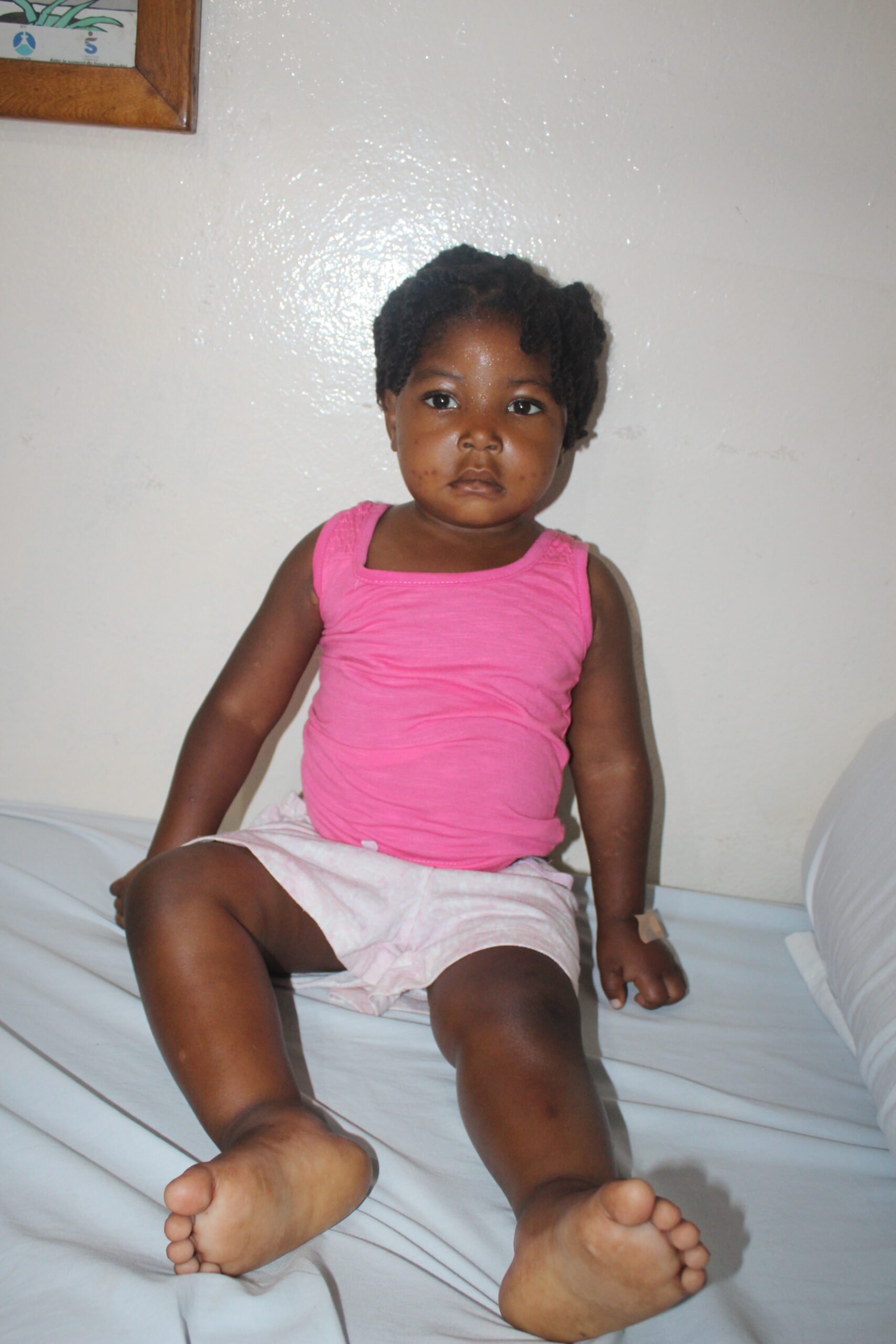
Thirty-two-month-old Woodayshina arrived at our clinic after a long four-hour journey by motorcycle. Although she weighed 15 kg (about 33 pounds), her body was swollen from 3+ kwashiorkor, a severe form of malnutrition that can hide the true extent of a child’s weight loss. She had also been suffering from a fever for ten days and a persistent cough, leaving her weak and in need of immediate medical attention.
Woodayshina is an only child. Her parents are separated, and she lives with her mother and other family members in a four-room home built of cinder blocks with a tin roof. The family survives on an average monthly income of just $30. They have no running water or flush toilet, although they do have an outhouse. Each day, they walk about ten minutes to collect water from a nearby community source.
Upon arrival, our medical team immediately admitted Woodayshina to the Nutrition Center with her mother. She was started on F-75 therapeutic milk to carefully stabilize her condition before transitioning to Medika Mamba as her appetite and strength returned. With daily medical care, therapeutic nutrition, and close monitoring, Woodayshina began the slow journey toward recovery.